
Responsibility & Position do not Equal Preparation
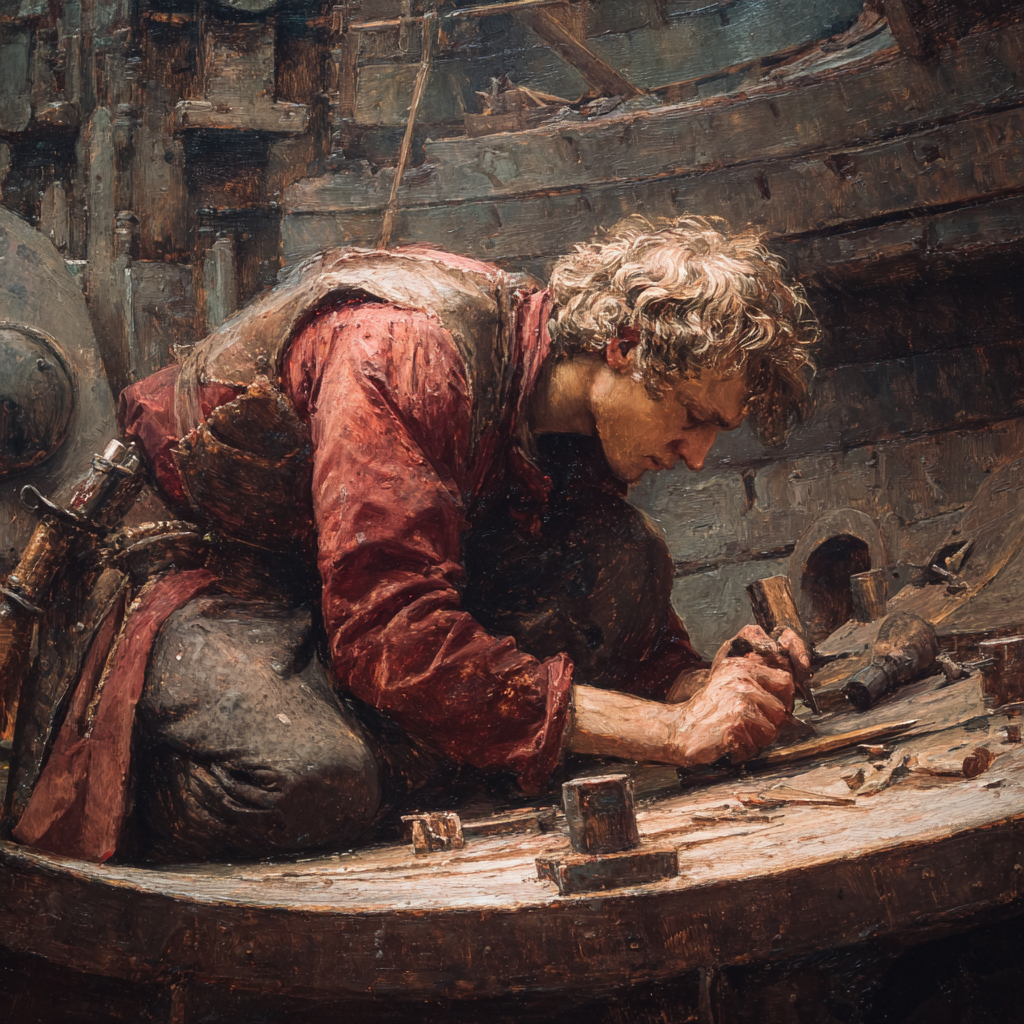
Meet Tzar Peter 1st of Russia
I credit my brilliant wife for this current deep dive into 17th century Russian history. She somehow found Peter the Great lurking in some rabbit hole she got sucked into and found it so interesting she made me crawl through it with her. Well, of course I saw it through the lens of a Leaderchip Cookie. So, bear with me.
There is a quiet but dangerous assumption that often slips into leadership. It is the idea that once we are given responsibility, that somehow equals preparation. History teaches something very different, and few lives illustrate it more clearly than that of Peter the Great, the ten-year-old Tzar of Russia.
Peter the Great was born in 1672 into the royal court of Russia, but there was nothing simple about his path to leadership. After his father died, the throne passed to his older half-brother, and when that brother died, things unraveled quickly. Rival family factions started fighting for control, and Peter, still just a boy, found himself right in the middle of it.
It turned violent in the Moscow Uprising of 1682, when palace guards revolted and blood was spilled inside the Kremlin. In the end, Peter was named co-tsar alongside his half-brother Ivan, with their sister Sophia really running things. He was about ten years old. He had the title, but no real control. What he did have was a front-row seat to how fragile leadership really is. That seems to have stuck with him. Somewhere in those early years, he figured out that if he was ever going to truly lead, he was going to have to get ready for it.
Any study of history demonstrates that few new kings have the capacity or maturity to lead a kingdom. Mostly they’re concerned with procreating to find an heir…I think you get what I mean.
What Peter did, however, still stands as one of the most remarkable acts of preparation in leadership history. So instead of pretending he knew what he was doing, he did something almost no one in his position would do. He left Russia.
In 1697, he headed out on what we now call the Grand Embassy, traveling across Europe not as a king looking for attention, but as a student trying to learn. He kept a low profile when he could. (He was tall, so his efforts at invisibility mostly failed.) He worked with his hands, and spent his time asking questions instead of giving orders. He went looking for people who actually knew how things worked.
In the Dutch Republic, he didn’t just tour shipyards, he worked in them. He learned how ships were built from the ground up. Not in theory, but in practice. How the keel was laid, how the ribs were shaped, how everything had to fit together so the ship could survive open water. He was out there doing the work because he knew that someday Russia would need a navy, and if he didn’t understand it, he couldn’t build it.
Then he went to England, where he spent time in the dockyards along the Thames. There he took it further. He studied full warships, how they were armed, how they were supplied, how they were maintained over time. He looked at rope-making operations, cannon foundries, navigation tools. He started connecting the dots. A navy wasn’t just ships. It was systems, industry, people, and precision all working together.
From there, he spent time in Prussia, focusing on the military. What he saw there was discipline and structure that Russia simply didn’t have. Soldiers trained the same way. Officers gave clear commands. Units moved with coordination. It wasn’t chaos. It was organized strength. He paid attention to how it all worked because he knew Russia would need that kind of order if it was going to stand against stronger nations.
When he came back home, he came back ready to act on what he understood.
He started building a navy. He reorganized the army. He brought in experts from across Europe to help train his people. He pushed into industry and education because he had seen firsthand how important they were. And when he founded Saint Petersburg, it wasn’t just about building a city. It was about opening Russia up and pointing it in a completely new direction.
What stands out to me in all of this is dang simple. He didn’t assume he was ready. He made himself ready.
He went and learned what he didn’t know. He surrounded himself with people who could teach him something. He prepared as he went, step by step, building real capability.
That’s the part that hits home.
It’s easy to step into responsibility and just start reacting. It’s harder to step back and ask, “Do I actually understand what I’m trying to lead?” Peter asked that question early, and he did something about it.
Leadership demands that kind of preparation. The kind you only get when you’re willing to be taught, willing to put in the time, and willing to admit you don’t have it all figured out yet.
Peter the Great became a great leader because he decided to prepare before it mattered most.
There is something deeply instructive in that choice. Peter dumped assumption or theory. He prepared himself by gaining real understanding. He treated leadership as a discipline that required study. (Of course I love him for that.) He knew that if he was going to build a navy, he needed to understand ships. If he was going to strengthen his military, he needed to understand how effective armies functioned. If he was going to expand industry and education, he needed to see how those systems worked where they were already successful.
Now might be the time for your own Grand Embassy.
About The Author

Leave A Comment